
Bacteria House Media is normally supplied as long, porous ceramic rods for koi pond shower filters, trickle filters and larger biological chambers. A useful purchase specification covers more than kilograms per box.
Rod dimensions, tray geometry, water distribution, prefiltration and export protection all affect whether the media is practical in the intended system.
Buyers may see the terms “bakki shower,” “shower filter” and “trickle filter” used for similar multi-tier systems. Product names do not establish equivalence. Ceramic media from each supplier should be evaluated against its own specification, sample and operating requirement rather than assumed to match a third-party branded product.
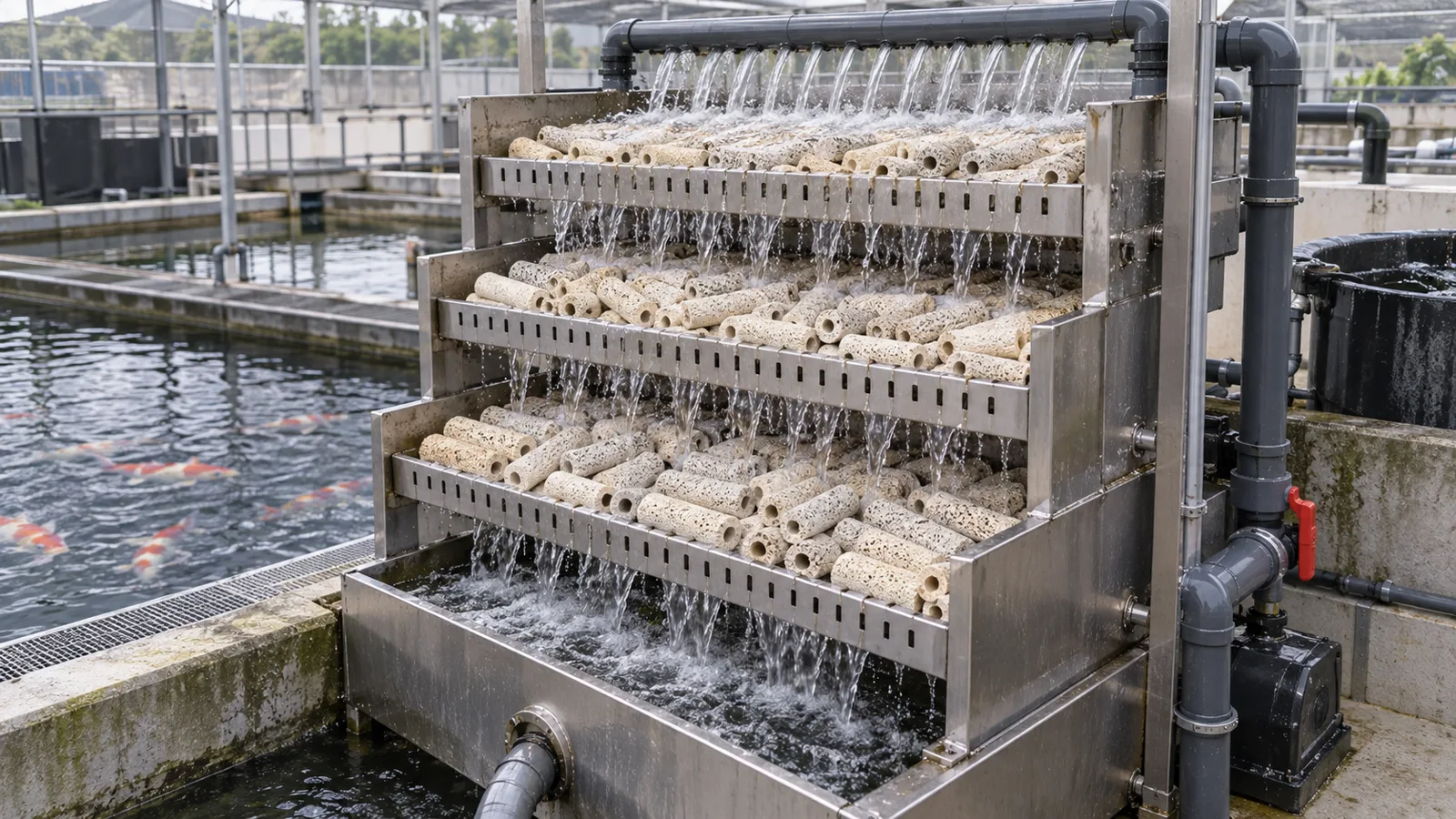
Start with the shower filter, not a generic media quantity
The filter equipment defines the space the media must occupy and the path water must follow. Before asking for a recommended quantity, provide the tray details:
- Internal length, width and usable depth
- Number of media trays
- Support-grid opening size
- Inlet arrangement and distribution-bar layout
- Expected operating flow range
- Outlet or weir arrangement
- Indoor, outdoor or enclosed installation
- Maximum acceptable loaded weight
These details are more useful than pond volume alone. Two systems serving similar ponds may have different tray areas, distribution patterns and mechanical prefiltration. A media quantity copied from another installation can produce poor tray fit or unnecessary freight.
Choose rod dimensions for tray fit and open water paths
Long rods make efficient use of shower-filter trays, but the pieces should not bridge awkwardly across a tray, fall through the support grid or pack so tightly that water bypasses sections of the media.
Compare rod length and outside diameter with the clear tray dimensions. Shorter rods can be easier to arrange in compact equipment and around internal supports. Longer rods can suit larger trays and reduce the number of individual pieces handled during loading. Neither is automatically the better option.
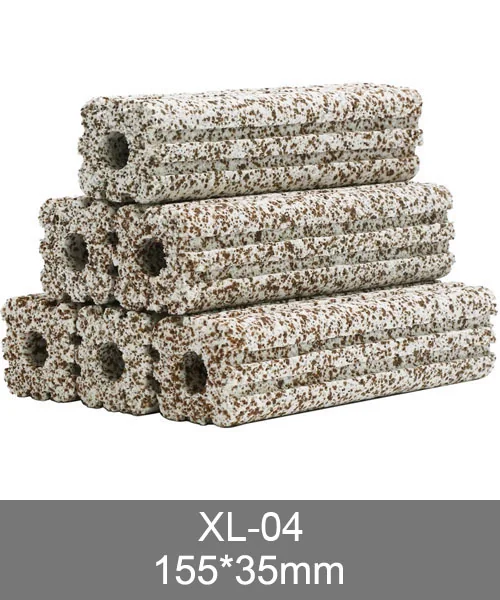
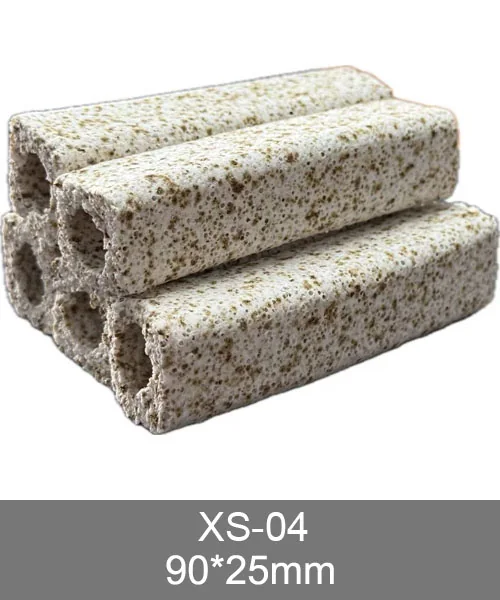
If several rod profiles or centre-hole designs are available, sample the exact model. Confirm nominal dimensions, normal tolerance, average unit weight and the condition considered acceptable at the rod ends. Photographs alone do not show whether a piece sits securely on the tray grid.
Preserve water and air movement through the bed
A shower filter relies on water being distributed across exposed media while air can move through the structure. Packing rods into a solid block may increase the weight in the tray but reduce open paths and make distribution less even.
The final loading pattern should be reviewed with the equipment supplier or system designer. As a purchasing rule, allow for:
- Open spaces between pieces
- Water access across the tray rather than one narrow channel
- Secure support without crushing lower pieces
- Access for inspection and cleaning
- The actual wet operating weight of the loaded tray
Ask for a small layout trial if the filter model is new. A photograph of the proposed arrangement in a tray or a dimensioned sketch is more reliable than specifying only a total media weight.
Check the water-distribution system
The top distribution bar, spray pipe or weir should apply water across the working area. Dry zones leave part of the media underused, while concentrated jets can move pieces, erode one location or send most flow through a limited path.
During commissioning, check the distribution at the expected operating flow rather than with the pump throttled to a convenient demonstration rate. Look at every tray, not only the top layer. Media placement, tray perforations and the way water falls from one tier to the next all influence the pattern.
Use the filter designer's specified operating flow. Ask the media supplier to confirm dimensions, packing density and physical fit against that design. A flow rating needs the tray layout, pond load and complete system arrangement to be meaningful.
Use appropriate mechanical prefiltration
Porous ceramic media supports biofilm, but a shower filter should not be treated as a substitute for every upstream solids-control step. Heavy suspended solids can collect on the media surface, settle in trays and make inspection more difficult.
The required prefilter depends on the pond and complete filtration design. For a commercial quotation, record what equipment sits before the shower unit and the expected incoming water condition. This helps distinguish a media problem from a solids-loading or distribution problem after commissioning.
Maintenance instructions should be agreed with the system designer. Aggressive cleaning or allowing wet, colonised media to dry can disrupt the established biofilm. Do not treat the system as maintenance-free; inspection, upstream equipment and operating conditions still matter.
Evaluate the ceramic as a physical product
Before a bulk order, compare production-representative rods for:
- Length, outside diameter and centre-hole dimensions
- Unit weight and pieces per carton
- Visible cracks, chips and blocked channels
- Surface consistency and agreed colour range
- Dust or fragments after a controlled handling test
- Soaking observations, including any unexpected pH or conductivity change
- Condition after wetting and drying
- Carton protection and transport breakage
Visible pore structure is not a complete performance measurement. If porosity, water absorption, surface area or other technical figures are quoted, request the method, unit, sample identification and report date. Do not compare supplier numbers produced under different methods as though they were identical.
Biological capacity cannot be approved from a dry sample alone. It depends on flow, oxygen, water chemistry, temperature, feed load, prefiltration and operating time. Buyers with a critical project should validate the selected media in the intended system or a representative pilot setup.
Account for the operating environment
Open shower filters can create water noise, splash, evaporation and heat exchange with the surrounding air. These effects may be acceptable or useful in one koi facility and undesirable in another.
Record whether the installation is indoors or outdoors, whether an enclosure is planned, the local winter conditions, ventilation and access for inspection. Any cover must preserve the airflow and drainage required by the equipment design. It should not be improvised after the media and filter have been ordered.
Salt exposure, direct weather and cleaning chemicals can also affect trays, fasteners and pipework even when the ceramic media itself appears unchanged. Equipment-material decisions belong in the full system specification.
Pack long ceramic rods for export handling
Rod media needs a different packing plan from small loose rings. Long pieces can be damaged at the ends when they move inside a carton or when a heavy box is dropped.
- Pieces or net weight per inner pack
- Rod orientation and layer arrangement
- Divider, liner or cushioning material
- Maximum carton gross weight
- Carton dimensions and board grade
- Pallet pattern and stack height
- Acceptable dust, chips and broken-piece limits on arrival
- Replacement or claim evidence required for transit damage
Run the packing trial with the selected rod size. Protection designed for a 90 mm piece may not control a 155 mm rod in the same carton. The packed sample, not an empty box drawing, should be the approval reference.
Build a clear wholesale or private-label offer
For a distributor, bacteria house media can be sold as bulk pond media, a pre-weighed carton, a bucket, or part of a coordinated koi-filtration range. The format should match the channel.
A pond installer may value carton-level identification and efficient handling more than decorative retail printing. A specialist shop may need smaller packs, clear size identification and installation guidance. Private-label artwork should state the supplied model and net content without copying claims associated with another branded media.
If multiple rod sizes are offered, give each SKU a distinct model code. Avoid selling different dimensions under one generic description; repeat orders and customer support become difficult when the actual media cannot be identified.
Inquiry checklist for shower-filter media
- Shower or trickle-filter drawing, model or internal tray dimensions
- Number of trays and support-grid opening size
- Intended operating flow range supplied by the equipment designer
- Pond application and upstream mechanical filtration
- Preferred rod dimensions or sample models
- Required media quantity or target tray loading
- Bulk, bucket or private-label packing preference
- Destination and pallet requirements
- Expected order quantity
- Inspection, test-report and sample-approval requirements
Send the filter details with the inquiry
UJW supplies Bacteria House Media in multiple rod formats for koi pond, shower-filter, trickle-filter and larger biological-media programs. Buyers can review the Bacteria House Media range, use the size guide, or send the filter and packing details through the inquiry form below.