
For an importer or private-label brand, packaging is part of the product specification. It affects landed cost, breakage, warehouse handling, shelf presentation and the time needed to launch a new SKU.
Approve the media, retail pack and export carton together. A pouch needs enough sealing clearance after filling; a bucket needs a secure lid; the carton must protect the contents within the agreed weight and freight dimensions. Resolve these details before releasing printed material for production.
Start with the sales channel, not the package catalogue
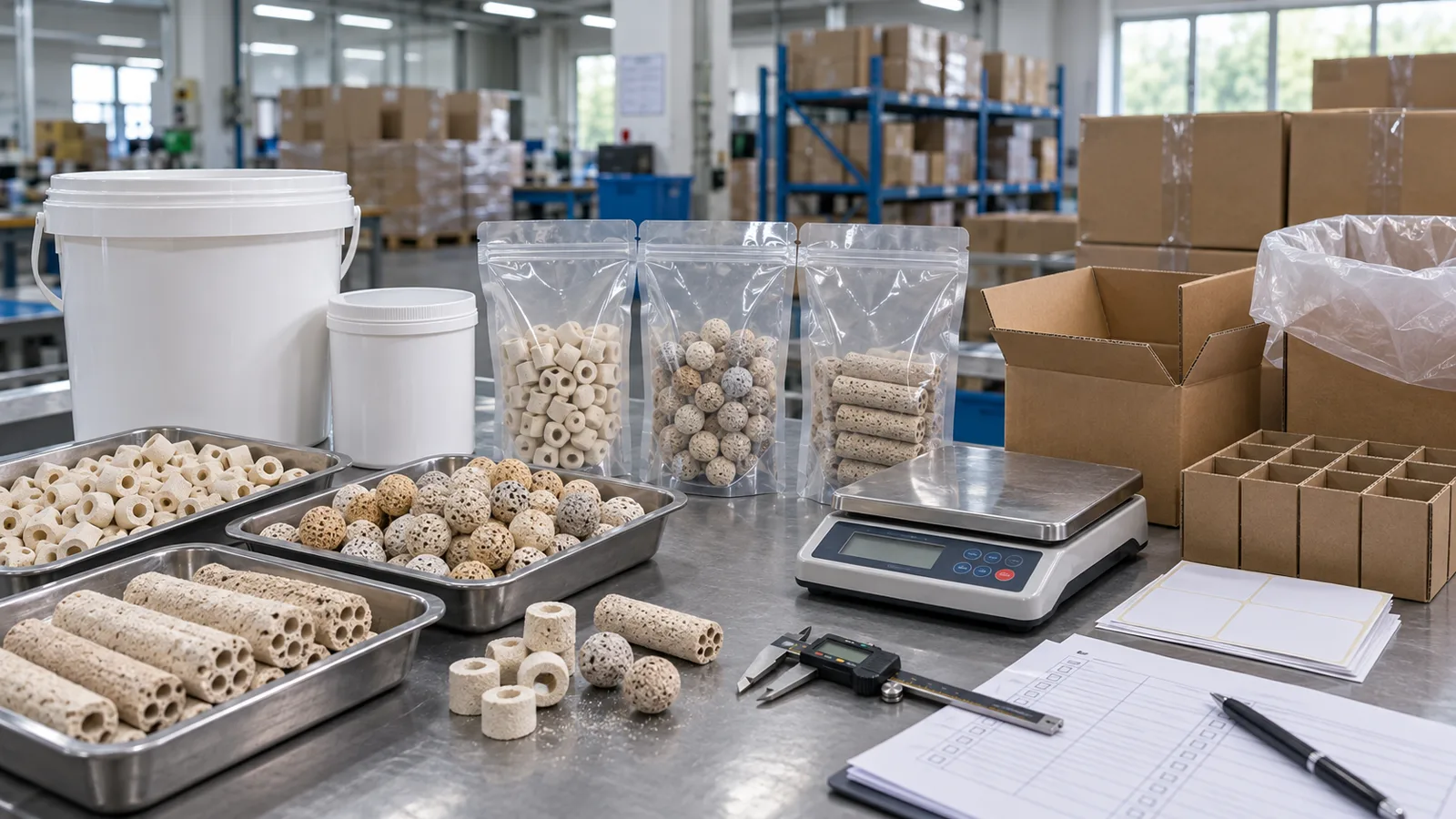
The right format depends on how the product will be sold and handled after arrival. An aquarium shop needs a compact retail pack with clear identification. A pond dealer may prefer a larger bucket that can be carried around a warehouse or job site. A distributor that repacks locally may only need lined bulk cartons.
Stand-up pouches
Stand-up pouches are a practical choice for ceramic rings, porous balls and smaller mixed media. They use shelf space efficiently and can support a clear window, zipper, hang hole or printed surface. The important checks are less visible: seal width, puncture resistance, zipper strength and the amount of headspace above the media.
Porous ceramic pieces have hard edges. A film structure that works for soft products may mark, crease or puncture during a long shipment. Test the selected pouch with the actual media, at the intended net weight, rather than approving an empty bag.
Jars and plastic buckets
Jars give small and medium packs a rigid shape and make the product easy to present. Buckets suit higher-volume pond media and professional channels. Both formats require a dimensional check because the container can add more freight volume than expected.
Confirm the lid fit, tamper-evident requirement, handle strength and the way units nest or stack before filling. If an induction seal, liner or shrink band is required, it should be included in the approved sample instead of added after the container has been ordered.
Printed inner boxes
An inner box can protect a pouch or jar and provide more space for brand copy, barcodes and instructions. It also adds printing cost, packing time and carton volume. For e-commerce or premium retail ranges, that trade-off may be worthwhile. For a price-sensitive wholesale line, a printed pouch inside a strong export carton may be the better structure.
Bulk cartons
Bulk cartons are normally the simplest route for distributors that pack locally or use the media as a component in another product. Agree whether the media will be loose in a liner, separated into plain inner bags, or packed in pre-weighed units. The carton still needs a defined net weight, liner specification, closure method and lot identification.
Set pack weight using the actual media
Do not estimate pack size from a photo or a nominal litre figure alone. Ceramic rings, balls and shaped porous media have different bulk densities. Even two products that look similar can settle differently in a pouch or bucket.
- Confirm the exact media model and size.
- Fill the proposed container with production-representative media.
- Check net weight, fill height and headspace.
- Close the pack and test how it sits, hangs or stacks.
- Recheck the result after normal handling and vibration.
The approved specification should state whether the SKU is sold by net weight, approximate volume or piece count. It should also define the acceptable packing tolerance. This prevents the retailer's label claim, the factory packing record and the commercial invoice from describing the product in different ways.
Dust and small fragments need to be discussed at the same stage. Porous ceramic media can rub during handling. The acceptable condition of the product, any dust-removal step and the treatment of broken pieces should be visible in the approved sample and inspection criteria.
Lock the media specification before final artwork
Packaging dimensions depend on the product inside. If the ring diameter, ball size, rod length, colour mix or surface finish changes after the dieline is approved, the fill height and presentation can change with it.
Custom shapes may also require tooling and a separate sample round. Complete product sampling first, then confirm the retail pack around that approved media. This order avoids paying to revise printed packaging because the physical product was still moving.
Give the supplier a complete artwork pack
A logo file is not a production-ready artwork package. For each SKU, the supplier should receive a controlled set of files and instructions that identifies the final version.
- Editable artwork and a reference PDF
- The approved dieline and finished dimensions
- Colour references and any print-finish requirements
- Barcode artwork, number and quiet-zone position
- SKU name, net-content statement and market language
- Lot or production-date area
- Country-specific warnings, recycling marks or importer details where required
- The position and destination of any QR code
- Carton marks and shipping-label requirements
The importer remains responsible for checking the legal and labelling requirements in the destination market. A packaging supplier can print the supplied content, but should not be expected to decide which claims, symbols or translations are legally acceptable for every country.
Keep version control simple. One named approval PDF per SKU, with a date or revision code, is safer than a message thread containing several files called “final”. Barcode numbers and language panels deserve a separate written check before plates or printed material are released.
Design the export carton around the retail pack
Retail packaging is only half of the job. The outer carton determines how well the finished units survive stacking, container movement and local delivery.
- Retail units per carton
- Carton internal and external dimensions
- Carton net and gross weight
- Board grade and closure method
- Inner liner, divider or cushioning requirement
- Carton orientation and stacking limit
- Shipping marks, SKU code and lot identification
- Pallet footprint, maximum height and stretch-wrap requirements, if palletised
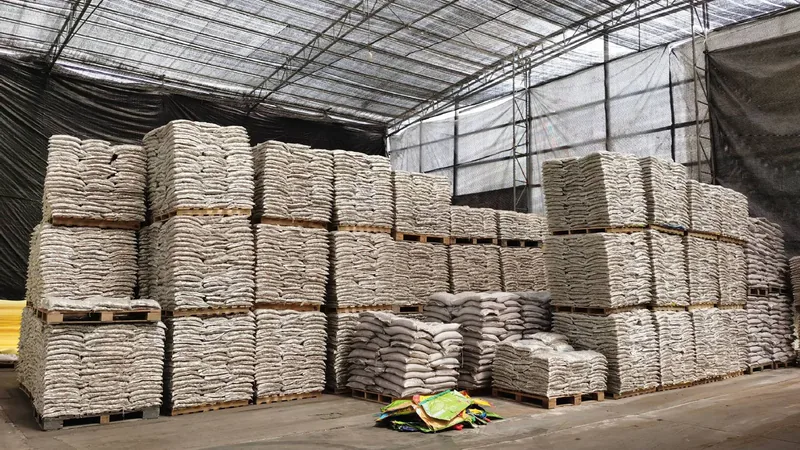
Ceramic media is dense. A carton can become difficult to handle before it looks full. Setting a practical gross-weight limit often produces a better result than filling the largest available box. For long bacteria-house rods or more fragile shapes, dividers and orientation may matter more than for compact rings.
Approve a physical packing sample
A digital mock-up confirms layout, but it does not show film strength, colour under real lighting, closure quality or how the filled pack feels in the hand. Before bulk printing, ask for a physical sample or a production-equivalent mock-up filled with the approved media.
- The media model and colour mix
- Actual net content and filled dimensions
- Print colour and registration
- Window and label position
- Seal, zipper, lid, handle and tamper feature
- Barcode scan
- Retail units per carton and carton fit
- Appearance after a basic handling or transit test
Keep one signed or clearly photographed reference sample with both buyer and factory. For repeat orders, that sample is more useful than relying on memory or a chat attachment from the first order.
Use a first-production check for a new SKU
The first mass-production run deserves an early check before all packaging is consumed. Inspect filled packs from the start of the run for weight, seal, print orientation and carton count. If a problem is found at that point, the remaining material can still be protected.
For a repeat order, record any approved changes instead of silently replacing the previous specification. A new film thickness, carton supplier, label material or unit count may look minor but can affect packing speed and shipment performance.
Common mistakes that delay private-label orders
- Artwork begins before the media is approved. A change in size or mix then forces a new dieline.
- The buyer supplies only a front design. The barcode, net content, importer details and lot area arrive later.
- Package volume is treated as product weight. The chosen container does not match the real bulk density.
- Only the retail pack is sampled. Carton fit and protection are discovered after printed material is finished.
- Too many versions circulate. The factory, designer and buyer approve different files.
- Freight dimensions are checked last. An attractive jar or box creates an avoidable increase in landed cost.
RFQ checklist for OEM aquarium filter media packaging
Send the following information with the first inquiry. It gives the manufacturer enough detail to recommend a workable packing route and quote the correct scope.
- Target media type, model, size and colour
- Destination market and sales channel
- Required net weight, volume or piece count per retail unit
- Preferred format: pouch, jar, bucket, inner box or bulk carton
- Estimated quantity by SKU
- Number of artwork versions and languages
- Barcode and market-label requirements
- Target units per carton and any gross-weight limit
- Pallet or non-pallet shipping preference
- Requested sample type and approval schedule
- Launch date or required delivery window
Plan the packing route with the product
UJW supports retail bags, jars, buckets, inner boxes, bulk cartons, labels and export-ready outer cartons for standard and custom filter-media programs. Buyers can review the custom filter media options, compare the full product range, or send the checklist through the inquiry form below for a packing recommendation tied to the intended SKU.