
A strong biological filter media range does not need dozens of similar SKUs. It needs clear roles, controlled specifications and a reason for each product to remain in the assortment.
For an aquarium brand or distributor, range planning should begin with the sales channel and equipment fit. Product shapes and colours come later. The aim is to give each SKU a reason to exist while keeping purchasing, packaging and repeat supply manageable.
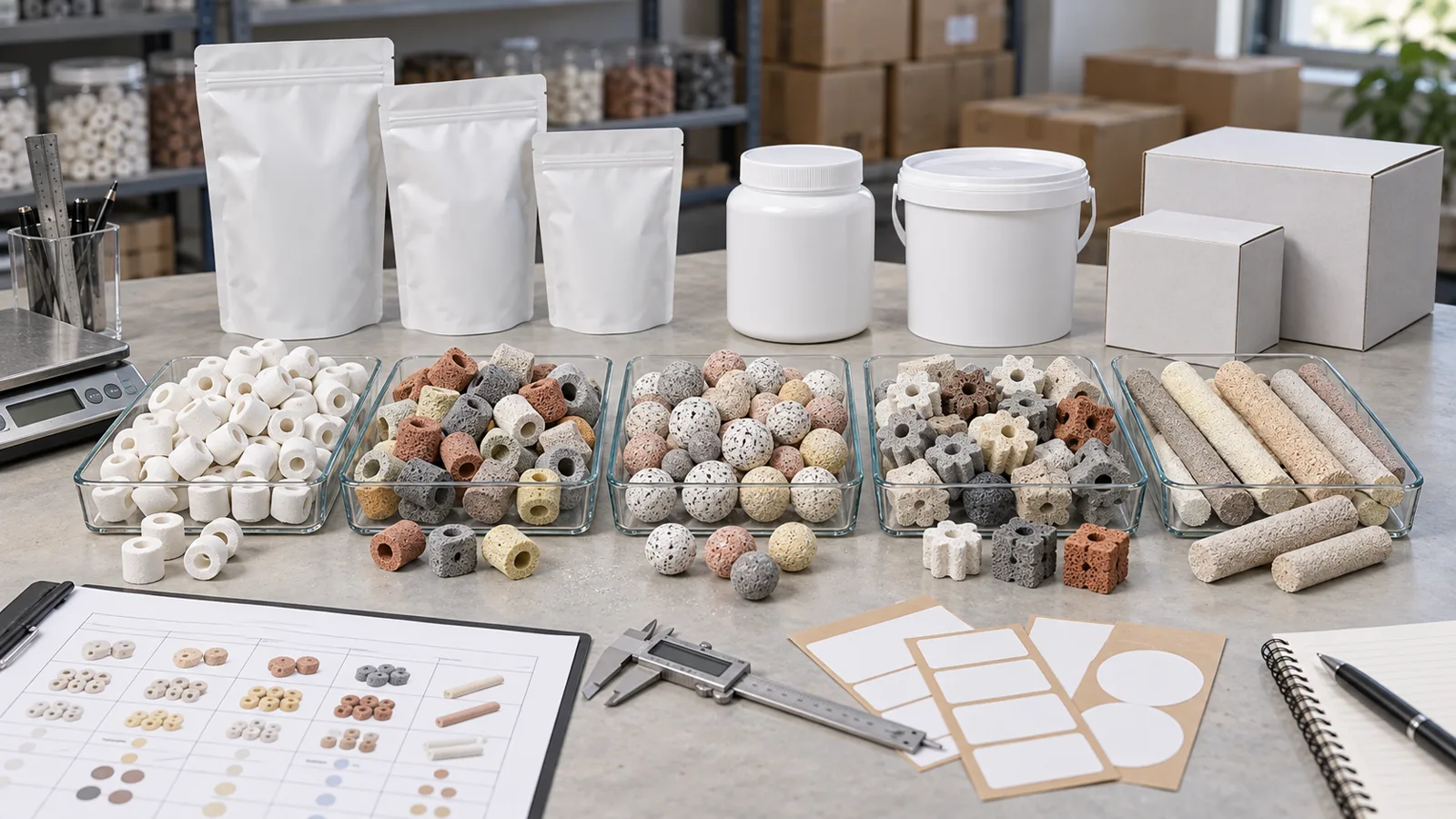
Define the commercial job of every SKU
Before requesting samples, describe what each product must do in the range. Useful roles include:
- Entry or core biological media
- Differentiated retail upgrade
- Compact canister refill
- Larger sump or pond pack
- Specialist shower-filter media
- Private-label or exclusive custom format
If two products have the same customer, equipment fit, price position and visual story, they may be duplicate SKUs. Adding another colour or minor shape without a commercial reason increases artwork, inventory and forecasting work without making the range easier to sell.
Use Ceramic Rings as the core line
Ceramic Rings are the most familiar starting point for many aquarium channels. They fit freshwater, marine, canister and sump programs, and buyers can understand the product without a long explanation.
A core ring SKU should prioritise consistency, practical basket fit, repeat availability and efficient packaging. Select a size that matches the main equipment channel and confirm how much media fills the intended pouch, jar or mesh bag. If both small canister baskets and larger sump chambers are important, use distinct model codes rather than calling one size universal.
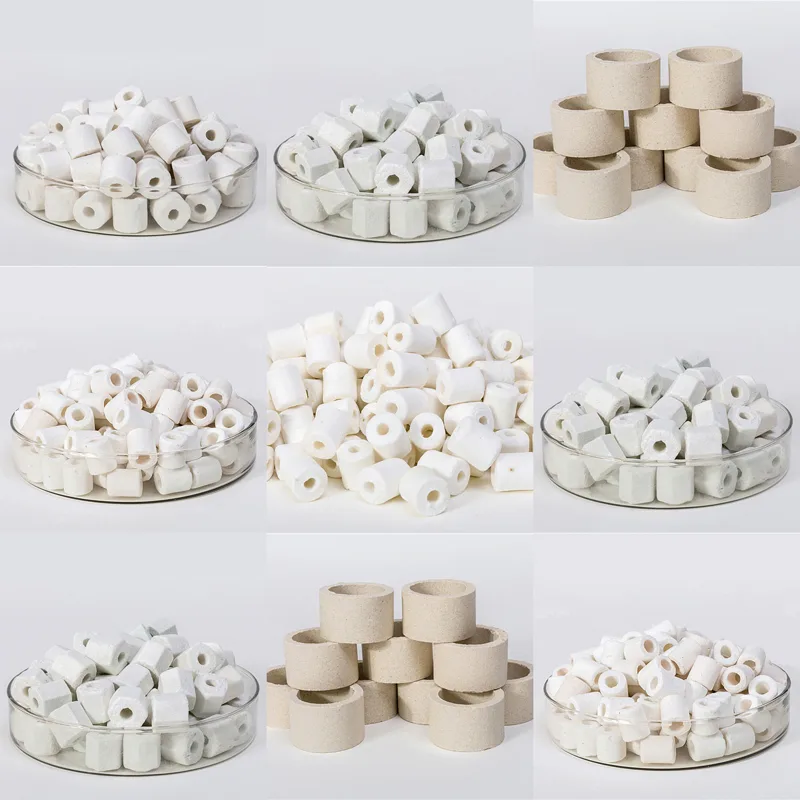
The core line normally carries the highest repeat-order expectation. Avoid frequent changes in dimensions, colour or package yield. A small apparent change at factory level can affect piece count, fill height and customer recognition.
Add one differentiated ring or ball family
Porous Bio Rings and Bio Ceramic Balls can give the range a visible step-up option without moving directly into custom tooling. Different colours, outside profiles and spherical formats create a clearer shelf distinction from standard white ceramic rings.
Choose the family based on the market rather than stocking every available variation. A distributor selling replacement media for common filters may value familiar ring dimensions. A private-label brand building a visually distinctive retail line may prefer ceramic balls or coloured specialty rings.
Labels should identify the physical format and intended filter applications. Colour alone does not establish a different biological function. Identify Bio Ceramic Balls as porous ceramic spheres so buyers can distinguish them from plastic wet/dry bio balls.
Use 3D Bio Media for a premium or design-led tier
3D Bio Media includes cubes, flower forms, blocks and other shaped porous ceramic pieces. It is best used where a brand wants a visibly different product, a premium presentation or a range that does not look like another standard ring assortment.
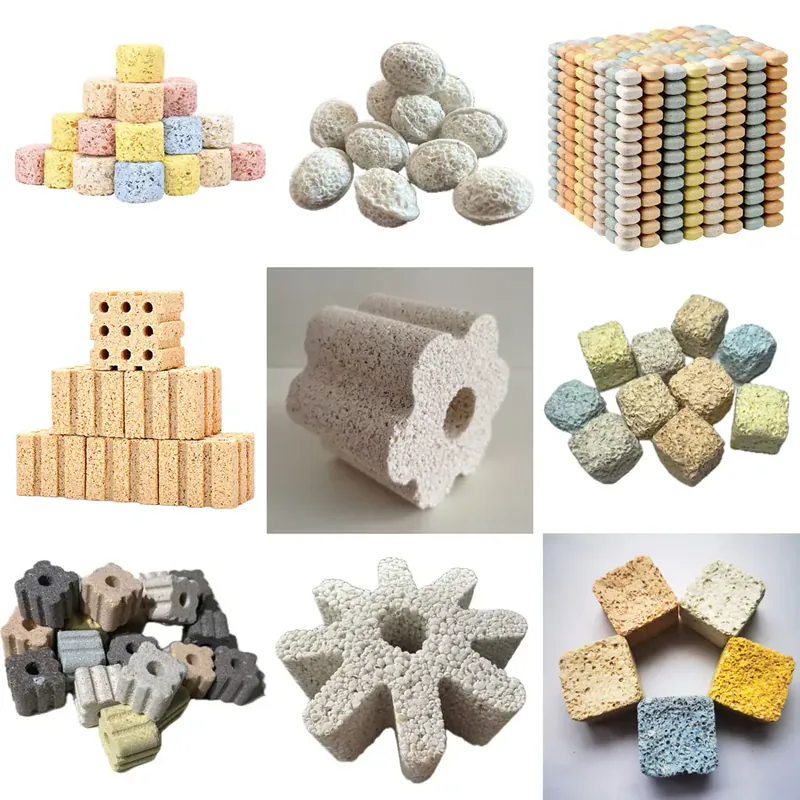
Mixed-shape packs need tighter definition than a single-shape SKU. Agree the included models, colour range, approximate mix or controlled weight basis, and what variation is acceptable between retail units. A display sample containing hand-selected shapes is not enough for a repeat-order specification.
If one shape becomes important to the brand, consider moving it into a dedicated SKU. That makes artwork, customer expectations and reorder control clearer.
Keep pond and shower-filter media as a specialist branch
Bacteria House Media uses longer porous ceramic rods suited to koi pond chambers, shower filters, trickle filters and larger biological systems. It should not be presented as a direct substitute for compact canister media.
Add this category when the brand already serves pond dealers, installers or higher-volume filtration customers. The range must support larger pack weights, stronger export cartons and clearer size identification. Equipment dimensions and rod handling matter more than decorative retail packaging in many professional pond channels.
Keeping the pond branch separate prevents the aquarium range from becoming confusing. It also allows different distributors, carton limits and sales material to be used without forcing every dealer to stock specialist media.
Treat Custom Filter Media as a development path
Custom Filter Media covers sizes and shapes developed around a buyer's equipment or brand requirements. Consider a custom format when the order needs to:
- Fit inside proprietary filter equipment
- Create a protectable visual identity
- Meet a customer-specific size or structure
- Build a repeat-volume program that supports tooling and approval work
- Replace a complex assortment with one purpose-designed format
Allow for drawings, tooling review, sample approval and packing trials in the launch schedule. Confirm expected repeat volume before committing to development costs; a standard format with private-label packaging may cover the initial requirement.
Build a controlled pack-size ladder
Pack sizes should reflect channel needs rather than use arbitrary round numbers. A compact canister refill, a general aquarium pouch, a larger sump bag and a pond bucket serve different buying situations.
- Net weight or piece-count basis
- Filled dimensions and headspace
- Package stability on shelf or in a carton
- Closure, seal or lid requirement
- Number of units per export carton
- Carton net and gross weight
- Pallet or container effect
- Barcode and artwork version
Limit the number of pack sizes at launch. One product in four weights can create more inventory complexity than four clearly different products in one weight each. Add a new size only when a customer group, retailer or equipment system justifies it.
Make names and images do real work
Use consistent category names across quotations, artwork, cartons and the website. A model should not be called “bio ring” on the pouch, “ceramic media” on the invoice and “bacteria stone” in the catalogue.
The main product image should show the media that is actually supplied. Mixed packs need an accurate mix photograph. Size-sensitive products should include a scale reference or clearly stated dimensions. Do not use a premium 3D image to sell an ordinary ring SKU.
Clear naming also improves internal operations. Sales, purchasing and the customer can identify the same SKU without relying on package colour.
Keep technical claims tied to evidence
Biological media supports the colonisation of beneficial bacteria; the complete filter system carries out biological filtration. Avoid assigning a universal aquarium volume, ammonia-removal rate or bacterial maturation time to a dry media sample without defined system conditions and supporting evidence.
For quoted properties such as apparent porosity, water absorption, bulk density or surface area, keep the test method, unit, sample model and report date with the claim. Results from different methods should not be compared directly.
Commercially useful claims are often simpler and easier to support: physical size and shape, net content, intended filter formats, available packing options, sample and OEM process, and batch controls.
Prepare a supplier data pack for every approved model
- Supplier and factory model code
- Approved display name
- Dimensions and tolerance
- Colour and surface reference
- Unit-weight or bulk-density method
- Pack weight and tolerance
- Current artwork and barcode
- Units per carton and carton dimensions
- Inspection criteria for dust, chips and breakage
- Approved sample photographs
- Change history and reapproval triggers
This data pack is the bridge between the first order and repeat supply. Without it, the second shipment can become a new negotiation even when the product name has not changed.
Launch the range in stages
- Core Ceramic Rings
- One differentiated Porous Bio Ring or Bio Ceramic Ball family
- One premium 3D Bio Media assortment
- Bacteria House Media only if the channel includes koi pond or shower-filter buyers
Review sales, returns, pack damage and customer questions before adding more colours or weights. Custom development can run in parallel for a confirmed buyer without delaying the standard range.
This staged approach keeps the initial order easier to consolidate, gives artwork teams fewer files to control and produces clearer sales feedback.
Range-planning checklist for aquarium brands
- Countries and sales channels
- Target filter types
- Planned good/better/best or core/premium structure
- Preferred product categories
- Target pack formats and retail price positions
- Expected quantity by SKU
- Private-label artwork and language count
- Required tests, documents and sample process
- Carton, pallet or container constraints
- Products that must remain exclusive or custom
Send a range brief
UJW supplies Ceramic Rings, Porous Bio Rings, Bio Ceramic Balls, 3D Bio Media, Bacteria House Media and custom-developed ceramic formats for aquarium and pond brands. Buyers can compare the full product catalogue, review Custom Filter Media, or send a range brief through the inquiry form below.