
Two porous ceramic media samples can look almost identical in a product photo and still behave differently in packing, handling and repeat orders. A useful approval method turns appearance into measurable purchasing criteria.
For an importer, the purpose of sample evaluation is not to choose the most dramatic-looking piece. It is to define a product that can be measured, packed, reordered and checked against future production. That requires a short written method and production-representative samples from every shortlisted supplier.
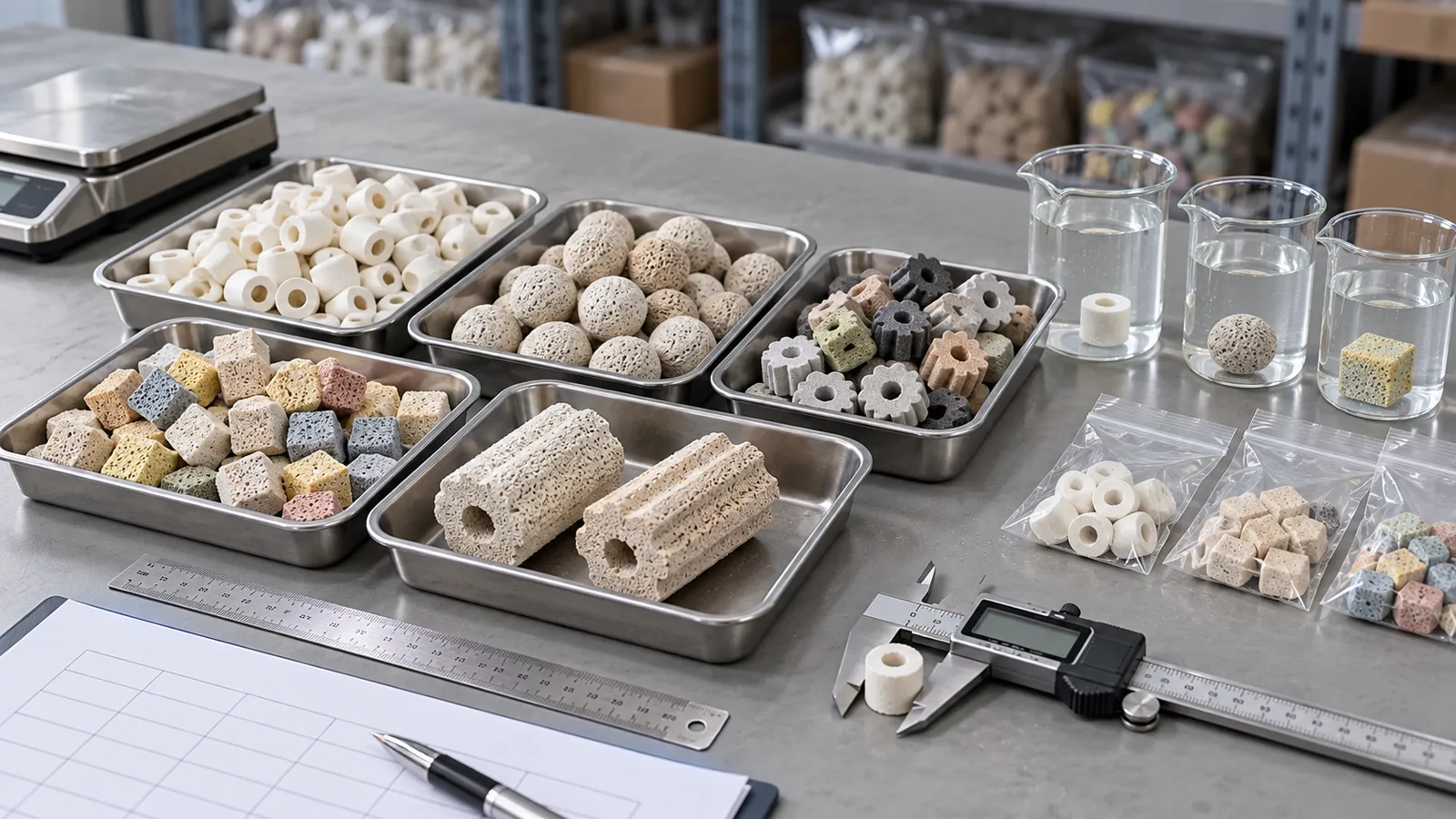
Compare one defined SKU at a time
Begin with a clear application and format. Do not place a small aquarium ring, a large pond rod and a coloured specialty shape in one ranking and ask which is “best.” They serve different filter spaces, pack sizes and sales channels.
For each candidate, record:
- Supplier and sample date
- Product name or model code
- Intended application
- Nominal dimensions and colour
- Sample quantity or sample weight
- Proposed retail pack and order quantity
- Whether the pieces came from normal production or a hand-prepared development sample
Assign your own internal sample code before testing. Supplier names can then be hidden during the first comparison, which helps the team judge the pieces against the same checklist instead of against price or familiarity.
Check dimensions, shape and usable consistency
Measure more than one piece. Porous ceramic products may have normal manufacturing variation, and a single perfect piece does not show the spread a buyer will receive in bulk.
Use a caliper to record outside diameter or width, length, centre-hole size and any critical wall thickness. For custom shapes, identify the surfaces that control fit in a basket, tray or package. The goal is not zero variation; it is an agreed tolerance that still works for the intended product.
- Check pieces that are visibly distorted or fused.
- Look for blocked or irregular centre holes.
- Identify sharp edges that could damage retail film.
- Define which chips change the saleable appearance.
- Set an approved colour range.
- Check whether the shape stacks or settles differently from the drawing.
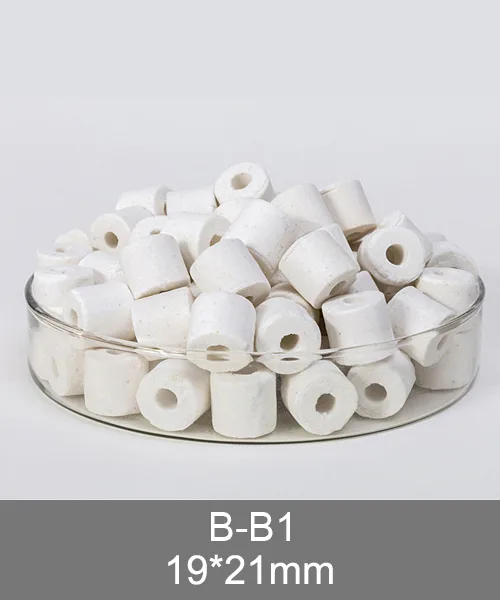
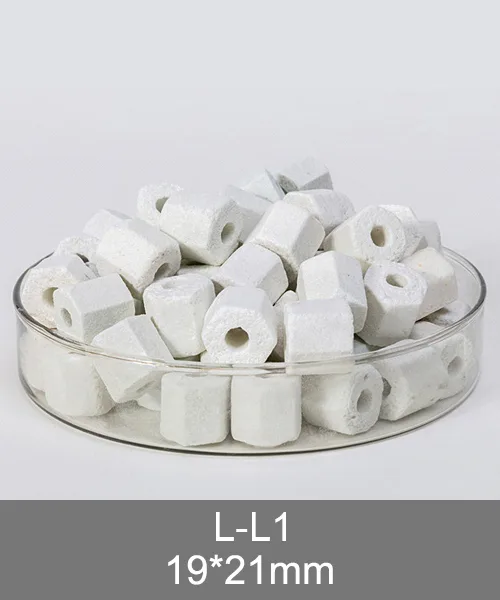
Measure weight and packing behaviour
Unit weight matters because it affects pieces per retail pack, freight, carton handling and the visual fill level. Weigh at least a practical group of pieces rather than relying on one item. Calculate an average and note the lightest and heaviest values if the spread is commercially relevant.
Then run a simple packing trial with the proposed pouch, jar or bucket. Record the net weight required to reach the target fill level, approximate piece count, settled height, sealing headspace, pressure against the packaging, units per carton and carton gross weight.
Bulk density can be useful for comparing shipment and pack efficiency, but the method must be consistent. Use the same container, fill procedure and settling method for every sample. A loosely poured value and a heavily vibrated value are not directly comparable.
Treat visible pores as an observation, not a performance certificate
Large surface openings can make a sample look highly porous. They do not, by themselves, establish internal pore connectivity, usable surface area, mechanical strength or biological performance in a working filter.
If a supplier quotes porosity, surface area, water absorption or bulk density, ask for the test method, sample basis, unit and report date. Results produced by different methods should not be placed in the same comparison column without qualification. A number without a method is marketing information, not a purchasing specification.
Water absorption and apparent porosity are valid ceramic properties when measured under a defined method. They still should not be converted into unsupported claims about ammonia removal or filter capacity. Biological filtration depends on the complete system, including water conditions, loading, flow, oxygen and operating history.
Use a controlled soak test to screen for surprises
A buyer can run a basic comparative soak test without pretending it is a laboratory performance test. Use equal dry weights of each sample, identical clean containers and the same volume of source water. Keep one container of source water without media as the control.
Before soaking, record the source-water pH, conductivity or TDS if available, temperature and appearance. Rinse every sample using the same procedure. After a fixed period, compare visible dust or colour release, odour, surface softening, pH and conductivity change versus the control, and pieces that crack after wetting and drying.
The result is a screening record for that sample and method. It is not proof of long-term biological capacity, and small meter readings should not be over-interpreted without calibrated equipment and repeat tests. If water chemistry is a critical claim, commission an appropriate independent test and define the pass criteria before the order.
Quantify dust, chips and transport breakage
Some loose powder is expected from many porous ceramic formats, especially after transport. The commercial question is how much is acceptable and whether the product still reaches the customer in the agreed condition.
Weigh or photograph the sample before and after a consistent handling test. Sieve or separate dust, chips and broken pieces using the same rule for each supplier. For rods and larger shapes, inspect both ends and the centre body. For small rings, check how much material collects at the bottom of the sample bag.
Ask how the production order will be protected. Inner bags, dividers, carton liners, maximum carton weight and pallet pattern can all affect the outcome. A strong media piece in an oversized carton may arrive worse than a more fragile piece in a well-designed pack.
Review the sample against production controls
A good sample is useful only if it can be repeated. Ask the supplier which characteristics are checked during normal production and what record can accompany an order.
- Which dimensions are controlled, and at what sampling frequency?
- How are colour and surface-finish ranges approved?
- Is net weight checked per retail unit and per carton?
- How are dust and broken pieces handled before packing?
- Can production lots be identified on the carton?
- What changes require a new buyer approval?
- Will a retained reference sample be kept for repeat orders?
Do not ask for a long list of certificates that have no connection to the SKU. A short, relevant inspection record tied to the ordered product is more useful than a generic report with a different model or an unclear sample date.
Set approval criteria before comparing prices
Set the importance of each criterion before opening the samples. A retail brand may place more weight on colour consistency and low dust. A bulk pond-media distributor may prioritise rod strength, carton efficiency and repeat supply. A custom canister-media program may care most about dimensions and basket fit.
- Fit and dimensional consistency
- Unit weight and pack yield
- Surface and colour consistency
- Dust and breakage after handling
- Controlled soak observations
- Packing suitability
- Supplier documentation and traceability
- Price and landed-cost effect
Keep measurements and commercial judgement in separate columns. “Average length: 20.4 mm” is a result. “Acceptable for our jar and filter basket” is a decision. The distinction makes later approvals easier to defend.
Approve a golden sample and written limits
Once a supplier is selected, confirm the exact model, colour range, dimensions, pack weight and allowable condition in writing. Keep a sealed reference sample from the approved lot, supported by dated photographs and the scorecard.
The reference should state which differences are normal and which require rejection or discussion. Porous ceramic media will not look injection-moulded, so the approval must allow realistic process variation without leaving every defect open to interpretation.
For the first bulk order, compare early production and packed cartons with the approved sample before the full run is completed. Repeat orders should be checked against the same record, not only against the previous shipment from memory.
Sample request checklist for importers
- Target filter type and sales channel
- Preferred media format and nominal size
- Required colour or assortment
- Proposed pack weight and packaging format
- Critical fit dimensions and tolerances
- Destination market
- Expected order quantity and number of SKUs
- Tests or documents that must be agreed before production
- Whether the sample must come from a normal production lot
Request samples against a clear brief
UJW supplies standard and custom porous ceramic media for aquarium, pond and private-label programs. Buyers can compare the aquarium filter media catalogue, review custom filter media options, or send a sample brief through the inquiry form below.